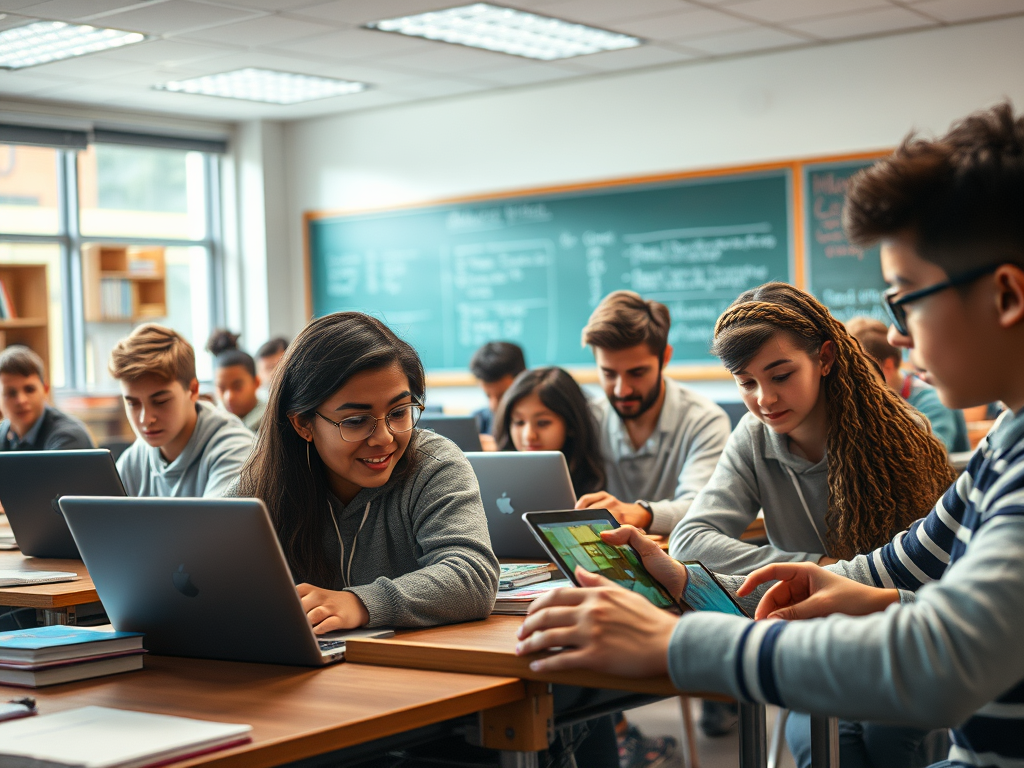
This week I read two GenAI stories that seem to be capturing the current status of the rise of GenAI and the impacts it’s having on our learning environments. Marc Watkins, whose substack recap of OpenAI’s Education Forum came to me via Audrey Watters’ excellent newsletter Second Breakfast (you should subscribe, too!). Watkins began his recap with this startling statistic “OpenAI’s Education Forum was eye-opening for a number of reasons, but the one that stood out the most was Leah Belsky acknowledging what many of us in education had known for nearly two years—the majority of the active weekly users of ChatGPT are students.” Meanwhile, other services that students flocked to in order to get the help they needed with their schooling are crumbling. Take this story about the rapid decline of Chegg. “Founded in 2005 as a textbook rental service, Chegg capitalized on the growing demand for affordable education resources, quickly gaining popularity among students. ‘Chegg it’ quickly became the act of using the platform to find answers.” You can see where this is going: the arrival of GenAI meant students could abandon their Chegg subscription and just ask ChatGPT, Gemini, or Claude.
It is no exaggeration to state that my inbox is filled daily with ed tech or just plain tech companies beseeching me to get GenAI tools into the hands of students. The general feeling is that, in order for students to have an even playing field as they move towards their eventual careers, they will need to have familiarity with the technology and how best to use it for productivity aims. Meanwhile, our students are using GenAI liberally and regularly, and teachers must come to terms with the fact that focusing on skill and drill, recall, and low-level learning as our primary teaching methods means that OpenAI is learning while our students aren’t.
I’ve never subscribed to the idea that learning is rote memorization. I love a good trivia night, but that recall isn’t evidence of learning. The APA Dictionary defines learning in this way, “n. the acquisition of novel information, behaviors, or abilities after practice, observation, or other experiences, as evidenced by change in behavior, knowledge, or brain function. Learning involves consciously or nonconsciously attending to relevant aspects of incoming information, mentally organizing the information into a coherent cognitive representation, and integrating it with relevant existing knowledge activated from long-term memory.”
That idea that learning needs to be identified as something beyond pure acquisition of information is an idea that has not yet permeated all of our classrooms. We are still relying too much on low-level recall or regurgitation tasks (I’m looking at you, 5 paragraph essay) to showcase learning. As to the lamenting about the impact of GenAI on learning, I am suspicious of that concern. If students were “Chegging It” before the arrival of GenAI, they’ve merely switched their methods to something slightly more efficient. But who actually has control over this system of trading questions for answers? The adults. The teachers. We are the ones who set the parameters. Students are effectively saying to us, “Don’t hate the player, hate the game.”

 Hey Human
Leave a comment